















HubSpot vs Attio CRM
Compare HubSpot vs Attio CRM on automation, customization, and pricing. Discover which CRM suits your team best and how to sync both systems seamlessly in real time.
- Author
- Ruben Burdin · Founder & CEO
- Published
- January 3, 2026
- Read time
- 5 min read
HubSpot vs Attio CRM: explore automation, customization, and collaboration. HubSpot excels in marketing automation and scalability, while Attio stands out for modern design, flexibility, and developer-friendly customization. Learn which platform fits your workflow and how to connect them for seamless data sync.
Why Compare HubSpot and Attio CRM?
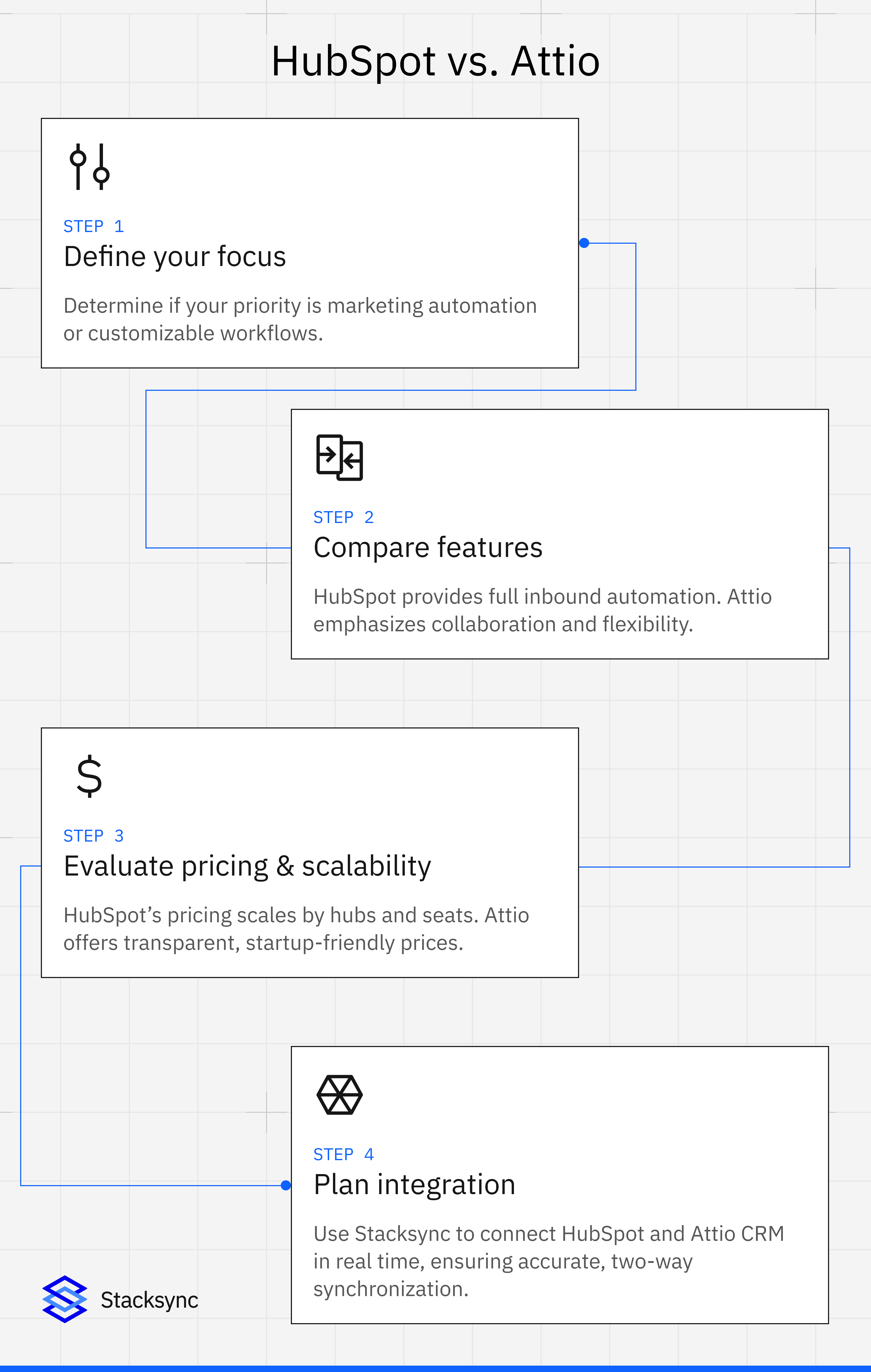
HubSpot and Attio CRM represent two different approaches to customer management. HubSpot focuses on inbound marketing and full-funnel automation, while Attio delivers a flexible, modern CRM for data-driven and collaborative teams. Comparing them helps you decide whether you need marketing-led automation (HubSpot) or customizable, product-driven CRM workflows (Attio).
Understanding HubSpot CRM for Marketing and Growth Teams
HubSpot CRM offers an all-in-one solution for marketing, sales, and service. It includes advanced automation, email marketing, and contact tracking in a user-friendly interface. HubSpot’s free plan and modular hubs make it ideal for startups and SMBs scaling their marketing and sales operations without heavy technical setup.
Attio CRM for Modern and Collaborative Teams
Attio CRM is a flexible, API-first platform that empowers teams to design their own workflows and data structures. Built for speed and adaptability, it offers real-time collaboration, pipeline customization, and automation without rigid templates. Attio’s clean UI and developer-friendly architecture make it ideal for startups and tech-savvy organizations.
HubSpot vs Attio CRM: Side-by-Side Comparison
| Category | HubSpot CRM | Attio CRM |
|---|---|---|
| Ease of Use | Intuitive; minimal setup | Modern UI; quick learning curve |
| Customization | Moderate; structured around hubs | High; fully customizable fields and layouts |
| Automation | Marketing and sales workflows | Lightweight automation; developer extensibility |
| Collaboration | Unified hubs for all teams | Real-time collaboration and sharing |
| Integrations | 1,000+ native and third-party apps | API-first; integrates easily via webhooks and Zapier |
| Reporting & Analytics | Advanced dashboards and attribution | Custom reporting; API-driven analytics |
| Pricing (2025) | Tiered hubs; scales with users | Flexible pricing; startup-friendly plans |
| Best For | SMBs and marketing-led companies | Startups and product-led organizations |
====== KEY TAKEAWAYS (Stacksync blue theme) ======
Key Takeaways
HubSpot CRM provides an all-in-one marketing and sales suite, ideal for SMBs scaling with structured workflows and built-in automation.
Attio CRM brings a modern, developer-friendly experience with flexible customization, API-driven analytics, and real-time collaboration tailored for agile startups.
While HubSpot excels in inbound marketing and user-friendly setup, Attio stands out for teams seeking modular data models, extensibility, and startup-ready pricing.

HubSpot vs Attio CRM: Pros and Cons Explained
HubSpot CRM
HubSpot is perfect for businesses that prioritize inbound marketing and automation.
- ✓ Unified marketing, sales, and service tools
- ✓ Intuitive interface and strong reporting
- ✕ Less flexible for custom data structures
Attio CRM
Attio shines for teams that value flexibility, collaboration, and API-driven customization.
- ✓ Fully customizable; modern interface
- ✓ Ideal for startups and data-focused organizations
- ✕ Limited built-in marketing and email tools
HubSpot or Attio: Which CRM Fits Best?
- Choose HubSpot if you need an all-in-one CRM with strong marketing automation and scalability.
- Choose Attio CRM if you prefer a modern, flexible CRM that adapts to your workflows and tech stack.
FAQ
Frequently asked questions